
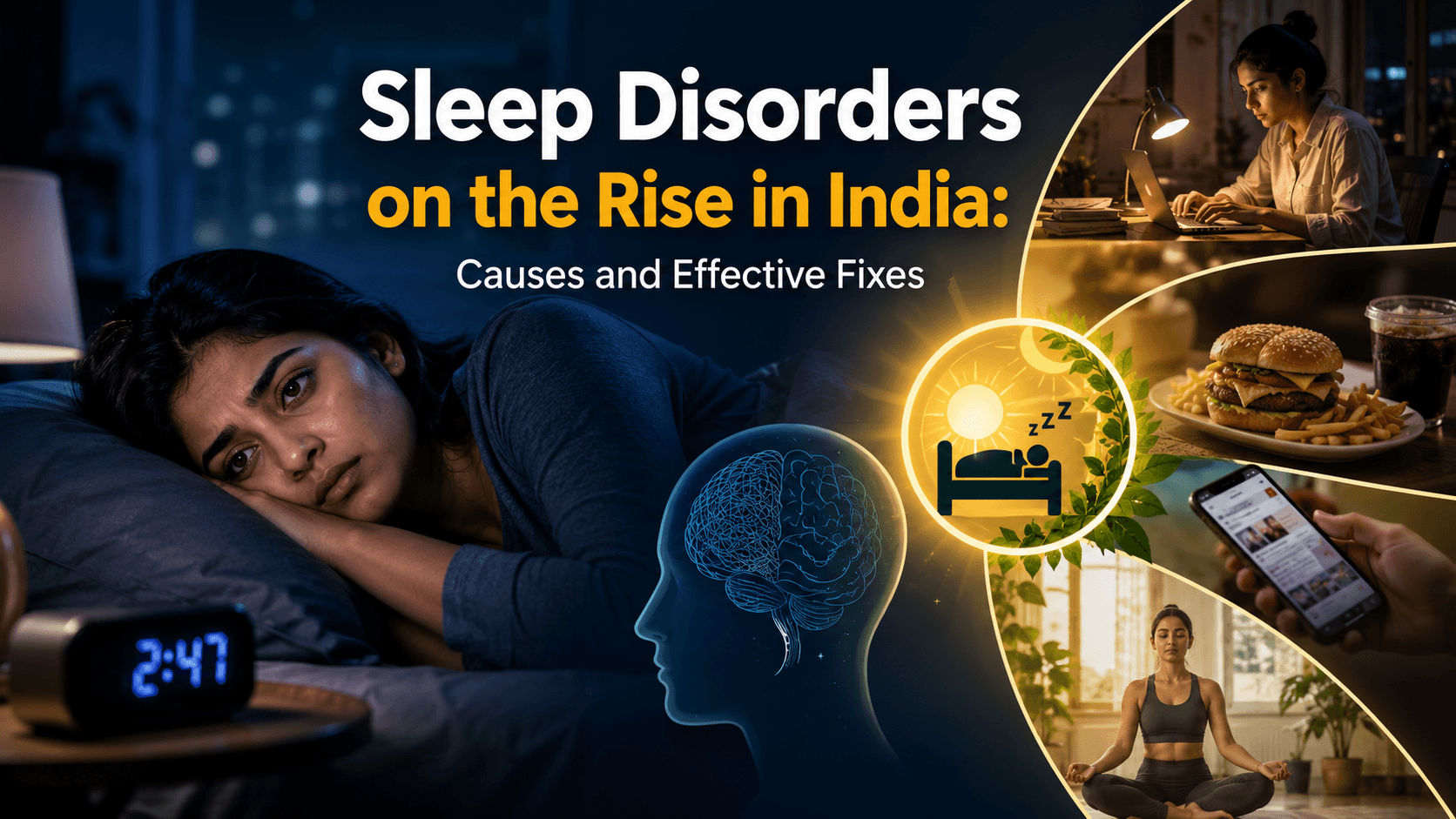
Sleep Disorders on the Rise : Causes and Effective Fixes
Sleep is vital for overall health, yet a growing number of people are grappling with poor sleep. From urban professionals to students, reports of sleep problems have surged. This article explores the root causes of sleep disorders and offers evidence-based solutions, including lifestyle tweaks and an effective insomnia cure approach.
1. Causes Behind the Surge in Sleep Disorders
1.1 Urbanization and Noise Pollution
Metro cities are known for traffic noise and constant construction. This cacophony disrupts natural sleep cycles, leading to fragmented rest and chronic fatigue.
1.2 Digital Device Overuse
Excessive screen time, especially before bed, suppresses melatonin production. Late-night scrolling on smartphones and laptops delays sleep onset, contributing to insomnia and other sleep problems.
1.3 Work Stress and Extended Shifts
Freelancers, shift workers, and corporate employees often work odd hours. Irregular schedules confuse the body’s internal clock, making it hard to maintain a consistent sleep pattern. Try Stress-Relief Techniques for a Calmer Mind.
1.4 Dietary and Caffeine Habits
High consumption of tea, coffee, and energy drinks keeps the nervous system on high alert. Spicy and heavy late-night meals can also cause indigestion, further disrupting sleep.
2. Common Types of Sleep Disorders
Understanding specific disorders helps in tailoring an insomnia cure strategy:
- Insomnia: Difficulty falling or staying asleep.
- Sleep Apnea: Interrupted breathing during sleep.
- Restless Legs Syndrome: Uncomfortable leg sensations.
- Delayed Sleep Phase Syndrome: Late-night sleep schedule shifts.
3. Health Impacts of Chronic Sleep Deprivation
Long-term sleep loss weakens immunity, impairs concentration, and increases risk for hypertension, diabetes, and mood disorders. Students may see declining academic performance, while professionals face reduced productivity and higher accident risk.
4. Scientific Insights into Sleep Regulation
Researchers highlight the importance of the circadian rhythm—a 24-hour internal process regulated by light exposure. Disruptions to this rhythm underline many modern sleep problems.
5. Evidence-Based Fixes and Insomnia Cure Strategies
5.1 Establish a Consistent Sleep Routine
Go to bed and wake up at the same time every day. Over weeks, this regularity reinforces your body’s natural clock.
5.2 Optimize Your Sleep Environment
Use blackout curtains, reduce noise with earplugs, and maintain a cool room temperature (18–20°C). A comfortable mattress and pillows tailored to your sleep style also help.
5.3 Limit Screen Time Before Bed
Switch off electronic devices at least one hour before sleep. Instead, read a book or practice gentle stretching to signal your brain that bedtime is approaching.
5.4 Mindful Nutrition and Caffeine Management
Avoid heavy meals and caffeinated beverages after late afternoon. Herbal teas like chamomile can serve as a natural insomnia cure support.
5.5 Relaxation Techniques
Incorporate meditation, deep-breathing exercises, or progressive muscle relaxation into your nightly routine. Mobile apps and guided audio sessions can assist beginners.
5.6 Seek Professional Guidance
If self-help strategies fail after a month, consult a sleep specialist or a clinical psychologist. Cognitive Behavioral Therapy for Insomnia (CBT-I) is a proven medical therapy for chronic cases.
6. Community and Policy-Level Initiatives
Awareness campaigns by health organizations encourage urban planners to adopt “quiet zones” in busy neighborhoods. Workplaces are also introducing flexible hours and designated nap spaces to foster better rest.
Conclusion
By understanding key causes and implementing structured fixes—from sleep hygiene to professional insomnia cure methods—individuals can reclaim restful nights and healthier days.
Also Read: