
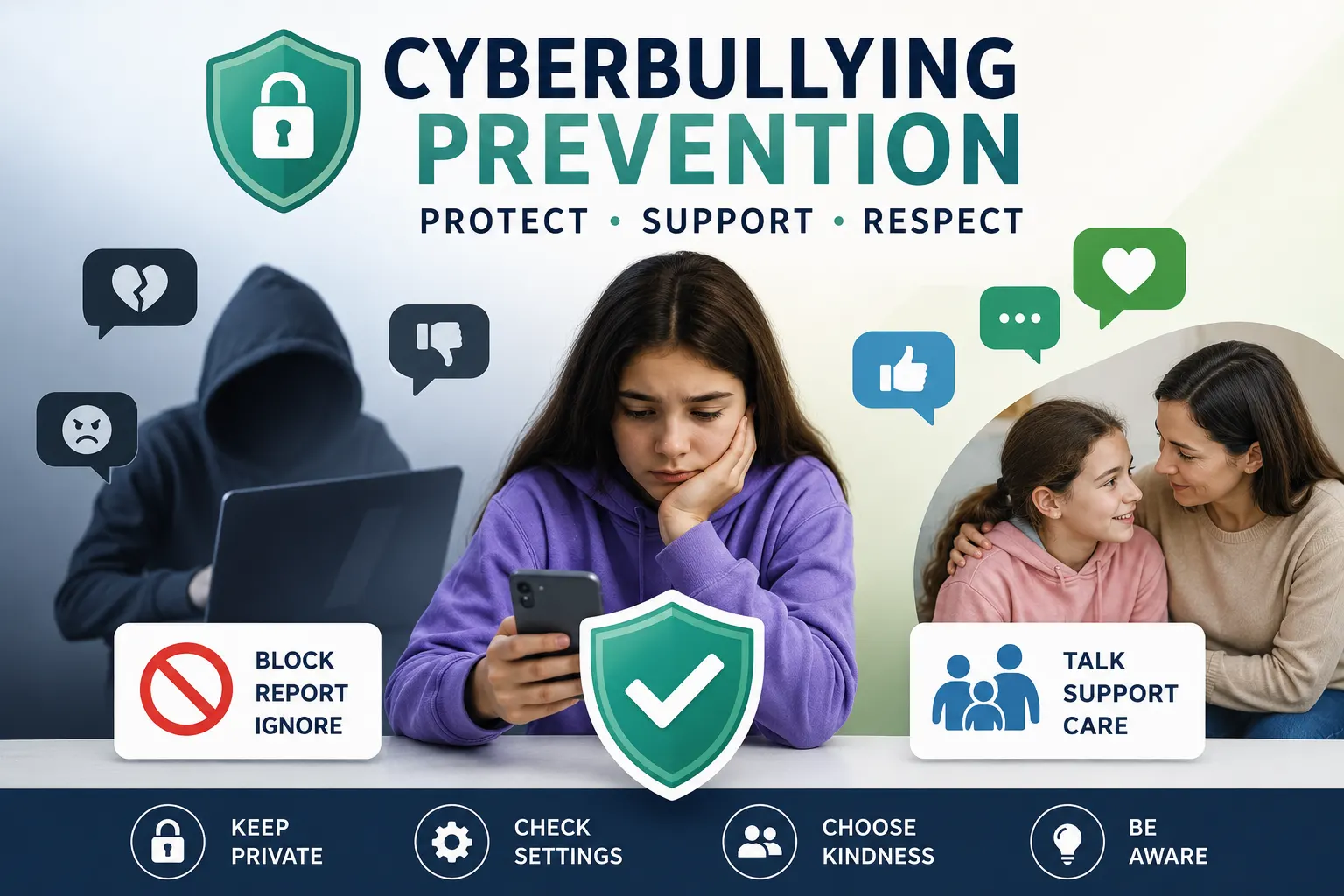
Cyberbullying Prevention: How to Protect Kids and Teens Online
The internet has become a major part of childhood and teenage life. From online classes and gaming platforms to social media and messaging apps, kids and teens are more connected than ever before. But with that connection comes a serious concern: cyberbullying.
Cyberbullying is not just “online teasing.” It can damage confidence, affect mental health, impact school performance, and make children feel unsafe even inside their own homes. According to StopBullying.gov, cyberbullying can happen through texts, apps, social media, forums, or gaming platforms where harmful content can be shared, viewed, or spread quickly.
The good news is that cyberbullying can be prevented and managed when parents, schools, and young people work together.
What Is Cyberbullying?
Cyberbullying is bullying that happens through digital technology. It can include sending cruel messages, spreading rumors online, sharing embarrassing photos, creating fake profiles, excluding someone from online groups, or repeatedly targeting someone through comments and messages.
UNICEF explains that cyberbullying can happen on social media, messaging apps, gaming platforms, and mobile phones, and it is usually repeated behavior meant to scare, shame, anger, or hurt the person being targeted.
Unlike traditional bullying, cyberbullying can follow a child everywhere. A hurtful post, screenshot, or message can spread within minutes and remain online for a long time.
Why Cyberbullying Is So Harmful
Cyberbullying can feel overwhelming because it often happens publicly and repeatedly. A child may feel like there is no escape, especially if the bullying continues after school hours.
It can lead to:
- Anxiety and stress
- Low self-esteem
- Social withdrawal
- Poor academic performance
- Sleep problems
- Fear of using digital platforms
For teens, the emotional impact can be even stronger because friendships, identity, and social acceptance play a major role during adolescence.
Warning Signs Parents Should Watch For
Children and teens may not always say they are being cyberbullied. Some may feel embarrassed, afraid of losing device access, or worried that adults won’t understand.
Common warning signs include:
- Suddenly avoiding phone or computer use
- Becoming upset after checking messages
- Hiding screens when adults enter the room
- Losing interest in school or friends
- Mood changes, anxiety, or sadness
- Deleting social media accounts suddenly
- Avoiding school or social events
If you notice these changes, approach your child calmly. The goal is to make them feel safe, not judged.
How Parents Can Help Prevent Cyberbullying
Prevention begins with open communication. Children should know they can talk to parents without fear of punishment.
1. Talk About Online Behavior Early
Don’t wait until something goes wrong. Discuss kindness, respect, privacy, and digital responsibility before your child becomes highly active online.
2. Know the Apps Your Child Uses
StopBullying.gov advises parents and adults to be aware of what children are doing online because kids may be using multiple digital platforms where cyberbullying can occur.
3. Set Clear Digital Rules
Create simple rules about screen time, privacy settings, sharing photos, and responding to strangers. Make these rules practical rather than fear-based.
4. Teach Kids Not to Respond in Anger
If someone sends a hurtful message, reacting emotionally can make the situation worse. Teach kids to pause, save evidence, block the bully, and report the behavior.
5. Keep Evidence
Screenshots, messages, usernames, dates, and links can help when reporting cyberbullying to schools, platforms, or authorities.
What Teens Should Do If They Are Cyberbullied
Teens should know that being cyberbullied is not their fault. They should not have to handle it alone.
Helpful steps include:
- Don’t reply immediately
- Take screenshots
- Block the person
- Report the account or content
- Tell a trusted adult
- Contact the school if classmates are involved
UNICEF notes that if cyberbullying involves students, reporting it to the school is important because many schools take bullying seriously and can take action.
The Role of Schools and Teachers
Schools play a major role in cyberbullying prevention. Even when bullying happens online, it often affects classroom relationships and student well-being.
Schools can help by:
- Teaching digital citizenship
- Creating anti-bullying policies
- Encouraging students to report abuse
- Supporting victims privately
- Taking online harassment seriously
A strong school culture can reduce bullying by making kindness, accountability, and respect part of everyday learning.
Building Digital Empathy
One of the best ways to prevent cyberbullying is to teach digital empathy. Kids should understand that every message, comment, or post reaches a real person with real feelings.
Parents can ask simple questions like:
- “Would you say this face-to-face?”
- “Could this comment hurt someone?”
- “How would you feel if someone posted this about you?”
These small conversations help children think before they post.
How to Make Online Spaces Safer
Online safety is not about removing technology completely. It is about using it wisely.
Parents can improve online safety by:
- Turning on privacy settings
- Limiting who can message or comment
- Reviewing friend/follower lists
- Using parental controls when needed
- Encouraging breaks from social media
- Choosing age-appropriate apps
Common Sense Media also offers parent-friendly guidance on cyberbullying and online safety, including how families can talk about online harassment and respond to it.
Conclusion
Cyberbullying is a serious issue, but it can be prevented with awareness, communication, and action. Kids and teens need guidance, not fear. Parents need to stay involved, not invasive. Schools need to create safe spaces, both offline and online.
The most powerful message we can give young people is simple: online words matter. A safer digital world begins when children learn to use technology with kindness, confidence, and responsibility.
Frequently Asked Questions (FAQs)
1. What is cyberbullying?
Cyberbullying is bullying that happens through digital platforms such as social media, messaging apps, gaming platforms, or texts.
2. How can parents prevent cyberbullying?
Parents can prevent cyberbullying by talking openly with children, monitoring online activity, setting digital rules, and teaching respectful online behavior.
3. What should a child do if they are cyberbullied?
They should avoid responding in anger, save evidence, block the bully, report the content, and tell a trusted adult.
4. Can schools help with cyberbullying?
Yes. If cyberbullying involves classmates or affects school life, schools can investigate, support the child, and take disciplinary action if needed.
5. Why is cyberbullying dangerous?
Cyberbullying can harm mental health, confidence, friendships, and academic performance, especially when it is repeated or public.
Also Read:
Parenting in the Digital Era: Raising Kids with a Healthy Tech-Balance
Read More:
Shielding Your Sanity: Tactics to Combat Online Hate and Negativity
The Hate Economy: How Online Negativity Drives Profits