
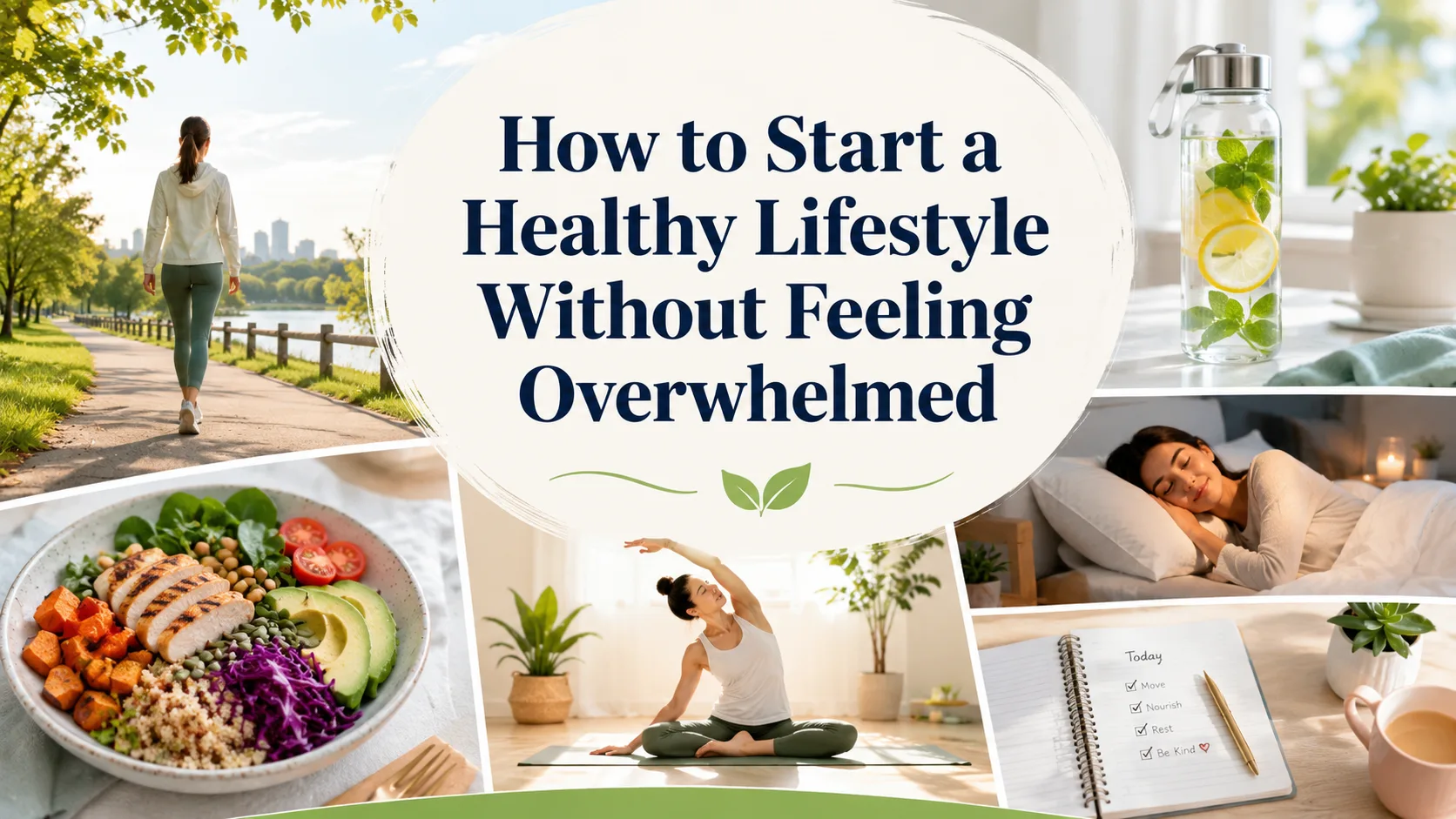
How to Start a Healthy Lifestyle Without Feeling Overwhelmed
Starting a healthy lifestyle sounds exciting at first. You imagine eating better, waking up early, exercising daily, drinking more water, sleeping on time, and becoming the best version of yourself.
But then reality hits.
Too many rules, too many diet trends, too many fitness plans, and too much pressure can make healthy living feel exhausting before you even begin.
The truth is simple: a healthy lifestyle does not require perfection. You do not need to change everything overnight. You only need to start small, stay consistent, and build habits that actually fit your life.
Health is not about punishment. It is about creating a routine that makes your body feel stronger, your mind feel calmer, and your daily life feel more balanced.
Why Most People Feel Overwhelmed
Many people fail to start a healthy lifestyle because they try to do too much at once.
They suddenly decide to:
- Wake up at 5 AM
- Quit sugar completely
- Exercise every day
- Drink 3 liters of water
- Stop eating outside food
- Sleep early
- Meditate daily
- Lose weight quickly
The problem is not the goal. The problem is the pressure.
When your lifestyle changes feel too strict, your mind sees them as a burden. This is why many people stay motivated for a few days and then return to old habits.
A better approach is to make health feel easy enough to repeat.
Start with One Habit at a Time
The biggest mistake people make is trying to fix everything together.
Instead of changing your entire routine, pick one habit and focus on it for a week or two. Once it becomes easier, add another habit.
For example, start with:
- Drinking one extra glass of water daily
- Walking for 10 minutes after dinner
- Sleeping 15 minutes earlier
- Adding one fruit to your day
- Reducing one sugary drink
Small habits may look simple, but they are powerful because they reduce resistance.
Harvard Health recommends focusing on one change at a time because small, manageable steps are easier to maintain long-term.
Do Not Start with a Perfect Diet
A healthy lifestyle does not mean you must eat salads all day or remove every food you enjoy.
Start by improving your current meals.
Instead of asking, “What should I completely stop eating?” ask, “What can I add to make this meal better?”
You can add:
- More vegetables
- More protein
- More fiber
- More home-cooked meals
- More water
- More mindful portions
For example, if you eat roti and sabzi, add curd, dal, paneer, eggs, or sprouts for protein. If you eat rice, add vegetables and protein instead of eating only rice with gravy.
Healthy eating becomes easier when it feels practical, not restrictive.
Move Your Body in a Way You Enjoy
Exercise does not have to mean going to the gym every day.
Movement can be:
- Walking
- Dancing
- Cycling
- Yoga
- Stretching
- Swimming
- Home workouts
- Playing a sport
The World Health Organization recommends adults aim for at least 150 minutes of moderate-intensity physical activity per week, along with muscle-strengthening activities on two or more days.
But if you are just starting, do not worry about hitting that number immediately. Begin with 10 minutes a day. Once your body gets used to movement, increase slowly.
Consistency matters more than intensity in the beginning.
Fix Your Sleep Before Chasing Big Goals
Many people focus only on diet and exercise, but sleep is one of the most important parts of a healthy lifestyle.
Poor sleep can affect:
- Mood
- Energy
- Hunger
- Focus
- Motivation
- Weight management
- Productivity
Start by creating a simple sleep routine.
Try this:
- Keep the phone away 30 minutes before bed
- Sleep and wake up at similar times
- Avoid heavy meals late at night
- Keep your room dark and calm
- Reduce caffeine in the evening
You do not need a perfect night routine. You just need a repeatable one.
Build a Healthy Morning Without Pressure
A healthy morning does not need to be complicated.
You do not have to wake up before sunrise, journal for 30 minutes, run 5 kilometers, and drink green juice before 7 AM.
A simple morning routine can include:
- Drinking water
- Stretching for 2 minutes
- Getting sunlight
- Eating a balanced breakfast
- Planning your top 3 tasks
The goal is not to copy someone else’s routine. The goal is to create a morning that helps you feel steady and prepared.
Reduce Screen Time Slowly
Screen time affects sleep, focus, mood, and productivity. But quitting screens completely is not realistic for most people.
Start with small boundaries.
You can:
- Avoid using your phone during meals
- Keep your phone away for the first 15 minutes after waking
- Stop scrolling 30 minutes before sleep
- Turn off unnecessary notifications
- Use app timers for social media
Healthy living is not only about your body. It is also about protecting your attention.
Drink More Water Without Overthinking It
Hydration is one of the easiest healthy habits to start.
If you forget to drink water, make it visible. Keep a bottle near your desk, bed, or bag.
Simple ways to drink more water:
- Drink one glass after waking up
- Drink water before tea or coffee
- Keep a bottle while working
- Add lemon, mint, or cucumber if plain water feels boring
Do not stress about hitting a perfect number. Just aim to drink more than you currently do.
Stop Comparing Your Journey
Comparison is one of the biggest reasons people feel overwhelmed.
You may see someone losing weight quickly, eating perfectly, or posting workout videos daily. But you do not know their full routine, body type, schedule, support system, or struggles.
Your healthy lifestyle should match your life.
A student, working professional, parent, business owner, and homemaker will all have different routines. What matters is progress, not comparison.
Make Your Environment Support You
Your environment affects your habits more than willpower.
If junk food is always visible, you will eat it more often. If your workout clothes are ready, you are more likely to move. If your phone is beside your bed, you are more likely to scroll at night.
Make healthy choices easier by setting up your surroundings.
Try:
- Keeping fruits visible
- Preparing simple snacks
- Placing a water bottle nearby
- Keeping walking shoes ready
- Removing distractions from your bedroom
- Planning meals in advance
You do not need more motivation. You need fewer obstacles.
Follow the 80/20 Rule
A healthy lifestyle should leave space for real life.
The 80/20 rule means you make healthy choices most of the time, while still allowing flexibility.
For example:
- Eat balanced meals most days
- Enjoy your favorite foods sometimes
- Exercise regularly, but rest when needed
- Sleep well most nights
- Avoid guilt after one imperfect day
This approach helps you stay consistent without feeling trapped.
What a Simple Healthy Day Can Look Like
Here is a realistic example:
Morning:
Drink water, stretch for 2 minutes, and eat a balanced breakfast.
Afternoon:
Eat a proper lunch with protein and vegetables, take a short walk, and avoid unnecessary snacking.
Evening:
Move your body for 15–20 minutes, spend time away from screens, and eat a lighter dinner.
Night:
Prepare for the next day, reduce phone use, and sleep on time.
This is not extreme. That is why it works.
Common Mistakes to Avoid
Avoid these when starting a healthy lifestyle:
- Trying to change everything overnight
- Following extreme diets
- Skipping meals to lose weight
- Exercising too hard, too soon
- Comparing yourself to influencers
- Expecting instant results
- Quitting after one bad day
- Ignoring sleep and stress
A healthy lifestyle is not built through pressure. It is built through patience.
Conclusion
Starting a healthy lifestyle does not have to feel overwhelming. You do not need perfection, expensive products, or a complete life reset.
Start small. Choose one habit. Repeat it. Then build slowly.
Drink more water. Move a little more. Eat more balanced meals. Sleep better. Protect your mind. Give yourself time.
The goal is not to become perfect. The goal is to become healthier in a way you can actually maintain.
A better life begins with one simple habit repeated daily.
Frequently Asked Questions
1. How do I start a healthy lifestyle as a beginner?
Start with one simple habit, such as drinking more water, walking for 10 minutes, sleeping earlier, or adding vegetables to one meal. Avoid changing everything at once.
2. What is the easiest healthy habit to start?
Drinking more water, walking daily, and sleeping on time are among the easiest habits to begin with.
3. Do I need to follow a strict diet to be healthy?
No. A healthy lifestyle is about balance, not strict dieting. Focus on portion control, nutritious meals, and consistency.
4. How much exercise should beginners do?
Beginners can start with 10–15 minutes of movement daily and gradually increase. Adults are generally recommended to aim for at least 150 minutes of moderate activity per week over time.
5. Why do I feel overwhelmed when trying to be healthy?
You may feel overwhelmed because you are trying to change too many habits at once. Start small and build gradually.
6. Can small habits really improve your health?
Yes. Small habits become powerful when repeated consistently. Even daily small steps can lead to better energy, mood, fitness, and confidence.
Read More:
Why You’re Always Tired — And How to Fix It Naturally
The Truth About Mental Health: Debunking 15 Common Myths