
Top 8 Monsoon Diseases in India and How to Prevent Them: Essential Rainy Season Health Tips
Stay Safe During the Monsoons: Common Ailments and Prevention
The rains refresh everything in India but also create ideal breeding grounds for bacteria, viruses and mosquitoes. Understanding common top 8 Monsoon Diseases in India and following simple rainy season health tips can help you and your family stay healthy. From waterborne infections to skin ailments, here’s a listicle of the top 8 illnesses during the rainy season with practical prevention strategies.
Top 8 Monsoon Diseases in India and Prevention Tips
-
Malaria
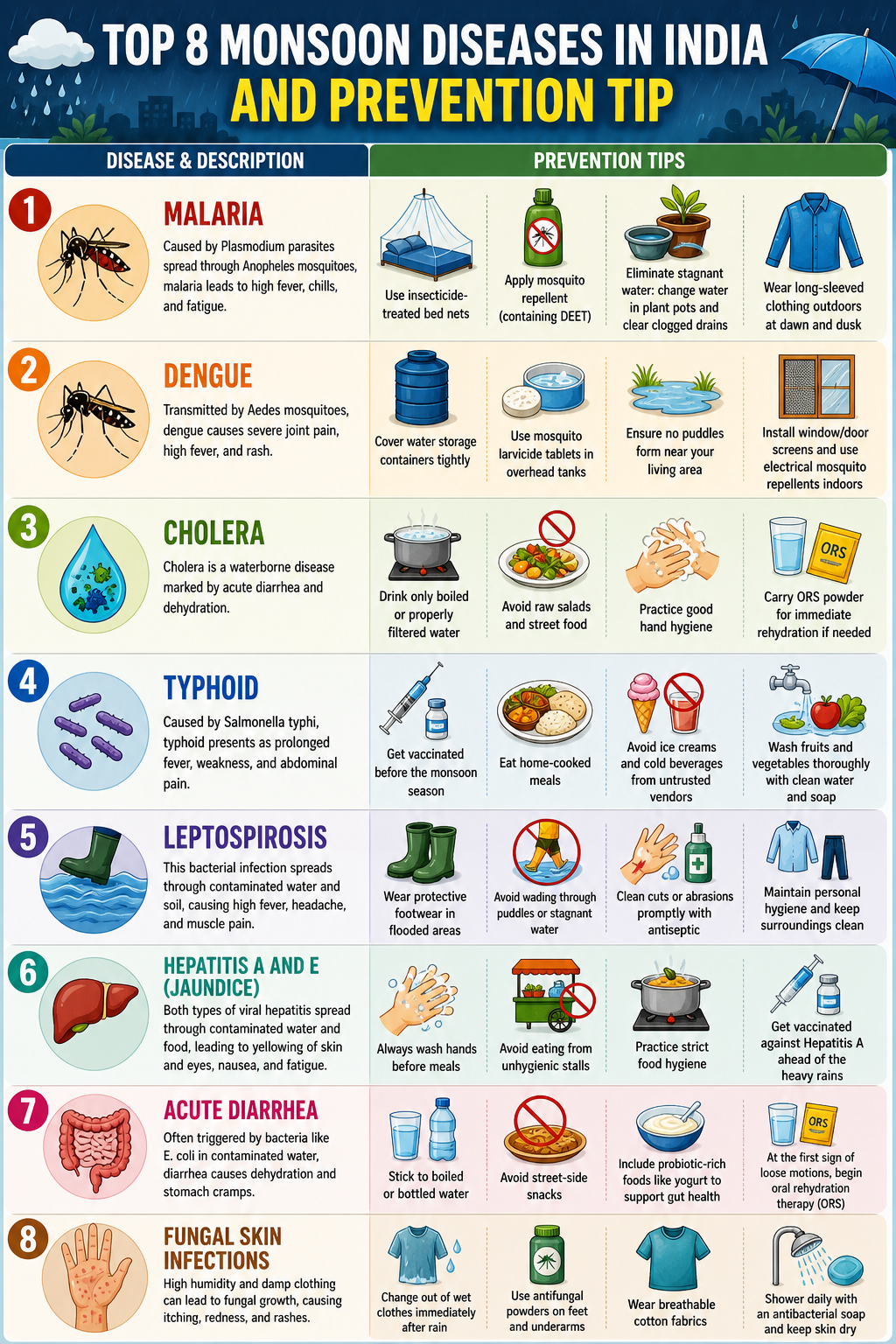
Caused by Plasmodium parasites spread through Anopheles mosquitoes, malaria leads to high fever, chills, and fatigue. To prevent malaria, use insecticide-treated bed nets, apply mosquito repellent containing DEET, and eliminate stagnant water around your home by changing water in plant pots and clearing clogged drains. Regularly wear long-sleeved clothing when outdoors at dawn and dusk.
-
Dengue
Transmitted by Aedes mosquitoes, dengue causes severe joint pain, high fever, and rash. Prevent dengue by covering water storage containers tightly, using mosquito larvicide tablets in overhead tanks, and ensuring no puddles form near your living area. Installing window and door screens and using electrical mosquito repellents indoors can also reduce risk.
-
Cholera
Cholera is a waterborne disease marked by acute diarrhea and dehydration. Drink only boiled or properly filtered water, avoid raw salads and street food, and practice good hand hygiene. Carry a portable water purifier or UV sterilizer when traveling. Keep an oral rehydration solution (ORS) powder handy for immediate rehydration if needed.
-
Typhoid
Caused by Salmonella typhi, typhoid presents as prolonged fever, weakness, and abdominal pain. Get vaccinated before the monsoon season, eat home-cooked meals, and avoid ice creams and cold beverages from untrusted vendors. Wash fruits and vegetables thoroughly with clean water and soap before consumption.
-
Leptospirosis
This bacterial infection spreads through contaminated water and soil, causing high fever, headache, and muscle pain. Wear protective footwear when walking outdoors in flooded areas. Avoid wading through puddles or stagnant water, and clean any cuts or abrasions promptly with antiseptic to minimize infection risk.
-
Hepatitis A and E (Jaundice)
Both types of viral hepatitis spread through contaminated water and food, leading to yellowing of skin and eyes, nausea, and fatigue. Practice strict food hygiene, avoid eating from unhygienic stalls, and always wash hands before meals. If possible, get vaccinated against Hepatitis A ahead of the heavy rains.
-
Acute Diarrhea
Often triggered by bacteria like E. coli in contaminated water, diarrhea causes dehydration and stomach cramps. Stick to boiled or bottled water and avoid street-side snacks. Include probiotic-rich foods like yogurt in your diet to support gut health. At the first sign of loose motions, begin oral rehydration therapy.
-
Fungal Skin Infections
High humidity and damp clothing can lead to fungal growth, causing itching, redness, and rashes. Keep skin dry by changing out of wet clothes immediately after getting caught in the rain. Use antifungal powders on feet and underarms, wear breathable cotton fabrics, and shower daily with an antibacterial soap.
Conclusion
By staying informed about monsoon diseases in India and adopting these rainy season health tips, you can significantly reduce your risk of falling sick. Make hygiene a daily habit, keep your surroundings clean, good nutrition, and seek medical attention promptly if symptoms persist. Embrace the monsoons with confidence and good health!
Also Read:
The Power of Food: 10 Fruits and Vegetables to Help You Recover from Dengue