
Why Vitamin D Deficiency in India Is on the Rise and How to Fix It
Understanding Vitamin D and Its Importance
Vitamin D, often called the sunshine vitamin, plays a crucial role in bone health, immunity and muscle function. It helps the body absorb calcium and phosphorus, two minerals essential for maintaining strong bones and teeth. Despite abundant sunlight, India faces a growing public health challenge: vitamin D deficiency India ranks among the highest in the world for low vitamin D levels. Many remain unaware of vitamin D symptoms such as fatigue, bone pain or frequent infections until the deficiency becomes severe.
Reasons behind Rising Vitamin D Deficiency in India
Indoor Lifestyle and Limited Sun Exposure
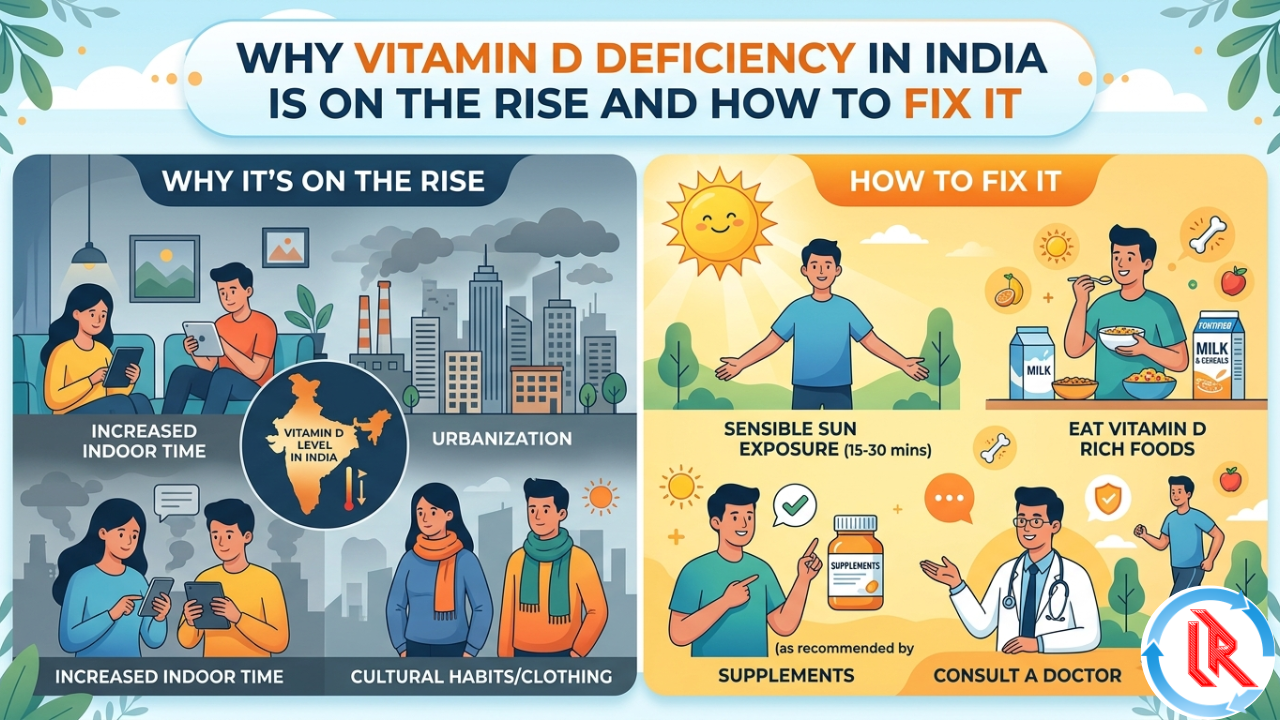
With urbanisation, more Indians work in offices, schools or from home, reducing daily sun exposure. Modern lifestyles mean we often shield ourselves with umbrellas, scarves and sunblock, further limiting skin’s ability to synthesise vitamin D.
Air Pollution
High levels of particulate matter in cities like Delhi, Mumbai and Bengaluru block UVB rays from reaching the skin. Persistent smog and haze can cut UVB penetration by up to 60%, making sunlight less effective for producing vitamin D.
Dietary Habits
Traditional Indian diets can be low in natural sources of vitamin D. Vegetarian meals, while rich in other nutrients, often lack fatty fish, egg yolks or fortified dairy products. Many households rely on staples like roti, dal and rice that offer minimal vitamin D content.
Recognizing Vitamin D Symptoms
Early vitamin D symptoms are subtle and easily mistaken for other issues. Common signs include chronic fatigue, muscle weakness, bone aches, hair fall and frequent colds. In children, deficiency can lead to rickets – a condition marked by soft, weak bones. Adults may experience osteomalacia or osteoporosis over time.
How to Fix Vitamin D Deficiency: Practical Tips
- Regular Morning Sunbathing: Spend 15–20 minutes in direct sun between 8 AM and 10 AM daily. Expose arms, legs or face without sunscreen to maximise vitamin D synthesis.
- Include Fatty Fish in Your Diet: Add salmon, mackerel or sardines to meals twice a week. These are among the richest natural dietary sources of vitamin D.
- Fortified Foods: Look for milk, yogurt, paneer and orange juice fortified with vitamin D. Many Indian brands now offer fortified options in groceries.
- Egg Yolks and Mushrooms: Incorporate egg yolks into your breakfast and include mushrooms in curries or stir-fries. Exposing mushrooms to sunlight before cooking can boost their vitamin D content.
- Supplement with Guidance: Consult a doctor for blood tests if you suspect deficiency. Your physician can recommend a daily supplement dosage, typically 600–2,000 IU, based on age and health status.
- Maintain Healthy Weight: Excess body fat can sequester vitamin D, making it less available for use. A balanced diet and regular exercise support both weight management and improved vitamin D levels.
- Use UV Lamps in Winter: For those in heavily polluted or high-latitude regions, UVB lamps designed for vitamin D production can be an alternative when sunlight is scarce.
Conclusion
Tackling vitamin D deficiency India wide requires a multipronged approach: sensible sun exposure, dietary changes and supplements where needed. By recognising early vitamin D symptoms and making simple lifestyle adjustments, Indian women can protect their bones, boost immunity and enhance overall well-being.
Also Read: